Soil fertility diagnosis and analysis of the introduction of agricultural mechanization in Uru Chipayas families
Victor Fredy Mita Quisbert, Dominique Hervé
DOI:
https://doi.org/10.53287/fkfb8438dz68fKeywords:
Quinoa (Chenopodium quinoa), potato (Solanum tuberosum), cañahua (Chenopodium pallidicaule), soil salinity and sodicity, Coipasa salt, lameo, weed freezing, zero tillageAbstract
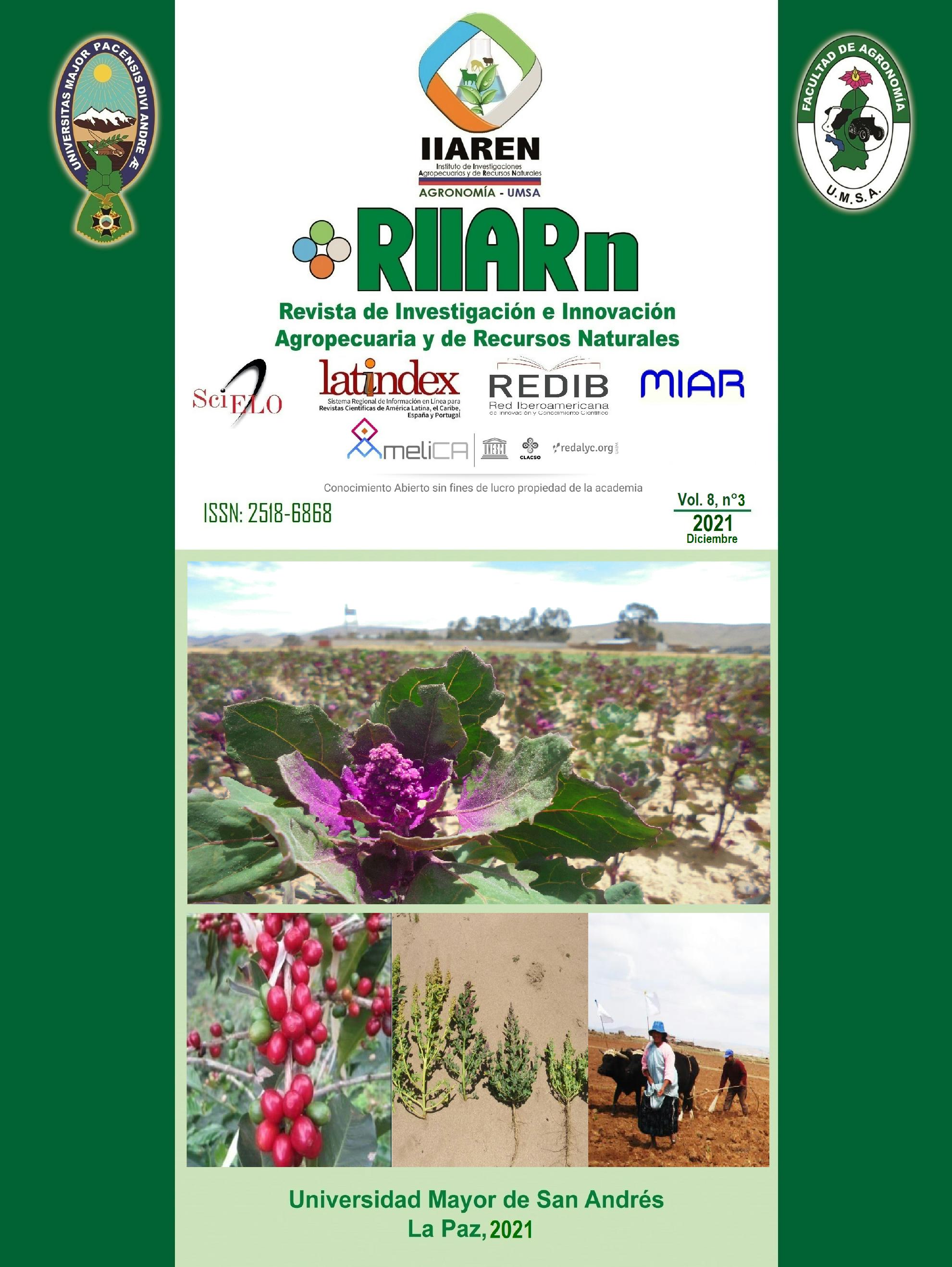
The Uru-Chipayas families manage to cultivate quinoa, cañahua and potatoes through ancestral agricultural practices such as the distribution of community plots, the annual rotation of sectors destined for agricultural and livestock production, zero tillage, land flooding (lameo) and freezing weed. This research analyzes the introduction of mechanization in the area of the salt flats in the south-east of Bolivia and diagnoses the fertility of agricultural soils used for the production of traditional crops (quinoa, cañahua and potato) and non-traditional crops (onion, carrot and tarwi). Soil sampling was carried out at various sites more or less distant from the salar and from each river that flows into the salar for its physical-chemical analysis at the time of planting the crops. It was obtained in clay loam soils with varied levels of organic matter, low levels of assimilable phosphorus and high levels of salinity and sodicity; concluding that the proximity to the Coipasa salt flat, the low annual precipitation (250 mm), the salinity and the sodicity that affect the soils, limit the agricultural productivity of the soils of the Chipaya municipality. The state's endowment of the tractor and the disc plow to till the land has deficiencies, due to the lack of trained personnel and maintenance of the agricultural tractor. Disc-plow tillage is faster, but is less adapted to saline soils than no-tillage for quinoa sowing.
Downloads
Published
How to Cite
Issue
Section
License

Revista de Investigación e Innovación Agropecuaria y de Recursos Naturales por Instituto de Investigaciones Agropecuarias y de Recursos Naturales, Facultad de Agronomía, Universidad Mayor de San Andrés se distribuye bajo una Licencia Creative Commons Atribución-NoComercial-CompartirIgual 4.0 Internacional.
Basada en una obra en http://riiarn.umsa.bo.
LOS AUTORES RETIENEN SUS DERECHOS:
a. Los autores retienen sus derechos de marca y patente, y también sobre cualquier proceso o procedimiento descrito en el artículo.
b. Los autores retienen el derecho de compartir, copiar, distribuir, ejecutar y comunicar públicamente el artículo publicado en la Revista de Investigación e Innovación Agropecuaria y de Recursos Naturales (por ejemplo, colocarlo en un repositorio institucional o publicarlo en un libro), con un reconocimiento de su publicación inicial en la revista Revista de Investigación e Innovación Agropecuaria y de Recursos Naturales.
c. Los autores retienen el derecho a hacer una posterior publicación de su trabajo, de utilizar el artículo o cualquier parte de aquel (por ejemplo: una compilación de sus trabajos, notas para conferencias, tesis, o para un libro), siempre que indiquen la fuente de publicación (autores del trabajo, revista, volumen, número y fecha).